
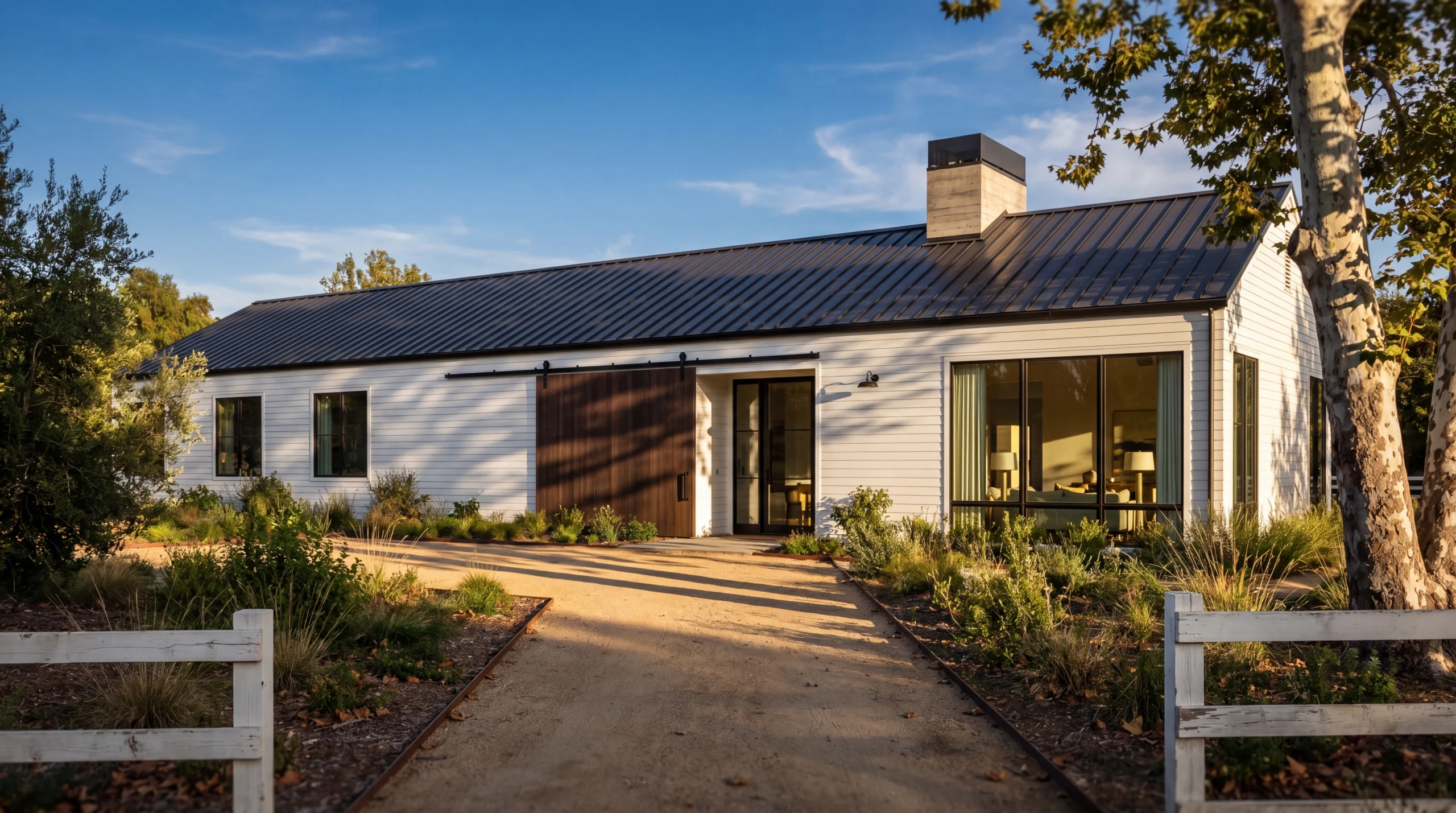
HIDDEN HILLS, CA
Designer-Led Remodeling in Hidden Hills
Equestrian-zoned estates behind the gates, where the Architectural Committee review shapes every design decision.
Hidden Hills is a small, incorporated, gated city of roughly two square miles, almost entirely zoned for equestrian use. The housing stock consists of estate homes on one-acre and larger parcels, with covered horse facilities, riding trails connecting to a community trail network, and barn structures common on most properties. Architectural style trends ranch, traditional, and Spanish revival, with newer custom builds adding contemporary and farmhouse vocabularies in the last decade.
Remodel work in Hidden Hills is almost always whole-home in scope, primary-suite or primary-bath in scale, or new accessory structures like barns, guest houses, and pool houses. The city's Architectural Committee reviews every exterior change, including material, color, fence, and landscape modifications. Our Tarzana office is about twenty minutes from Hidden Hills via the 101 and Long Valley Road, depending on gate timing.
Remodeling Services in Hidden Hills
- Kitchen Remodeling in Hidden Hills
- Bathroom Remodeling in Hidden Hills
- Whole-Home Remodeling in Hidden Hills
- Room Additions in Hidden Hills
- ADU in Hidden Hills
- Windows & Doors in Hidden Hills
- Backyard Remodeling in Hidden Hills
- General Remodeling in Hidden Hills
- Exterior Painting in Hidden Hills
- Front Facade Remodeling in Hidden Hills
Hidden Hills projects in our pipeline are predominantly whole-home remodels of estates built between the 1970s and 1990s, primary-suite and primary-bath expansions, and new accessory structures including guest houses, pool houses, and updated barn facilities. Kitchen rebuilds at chef scale, with butler's pantries and dual islands, are common as part of larger whole-home programs. Outdoor program work typically integrates pool, covered loggia, and equestrian-facility updates.
Why Hidden Hills homeowners hire Master in Design
Master in Design has worked Hidden Hills addresses since 2012, and the Architectural Committee process is built into how the team scopes design from day one. CSLB License #979219 covers our in-house architecture, interior design, and general contracting team. The City of Hidden Hills Architectural Committee meets on a published schedule and reviews every exterior alteration before any building permit can issue. The city's equestrian zoning also affects setbacks, accessory structure placement, and pasture-area calculations on any addition footprint.
Neighborhoods we serve in Hidden Hills
Hidden Hills is compact, but the neighborhoods inside the gates each have their own character:
- Round Meadow
- Long Valley
- Spring Valley
- Ashley Hills
- Saddle Creek
- Jed Smith corridor
Hidden Hills Remodeling FAQ
How does the Hidden Hills Architectural Committee review affect our project schedule?
The Hidden Hills Architectural Committee reviews every exterior change, including material, color, fence, gate, landscape, and accessory-structure modifications. Submittals include elevations, material and color samples, site plan, and landscape impact. The committee meets on a published schedule, and first review commonly takes four to eight weeks with revisions requiring another review cycle. The city will not issue building permits until Architectural Committee approval is final. We package the committee submittal alongside the architectural set so the two tracks move in parallel.
What's a realistic timeline for a Hidden Hills whole-home remodel?
Whole-home remodels in Hidden Hills typically run six to ten months of construction, depending on scope, finish level, and whether new accessory structures are included. Design, Architectural Committee approval, and city permitting on top of that commonly add four to six months. Equestrian-facility modifications and pasture-area calculations add coordination steps. Custom material lead times, particularly for imported stone, custom steel windows, and reclaimed wood, often drive the construction calendar.
How does equestrian zoning affect what we can add to our Hidden Hills property?
Hidden Hills is zoned predominantly for equestrian use, which sets minimum pasture areas, regulates the placement and size of accessory structures including barns and guest houses, and affects rear and side setback rules. Additions to the main residence have to preserve required pasture area, and new accessory structures need to respect both city setbacks and Architectural Committee guidelines on placement relative to the main house. We run the zoning analysis early in design so the addition footprint and any new outbuildings are sited within what the code actually permits.
Also serving the San Fernando Valley
Beyond Hidden Hills, our team builds across the Valley and into West LA:
Start your Hidden Hills remodel
Get an honest scope and schedule from a CSLB-licensed design-build team that lives 5 to 30 minutes from your home.
Request a Free Estimate