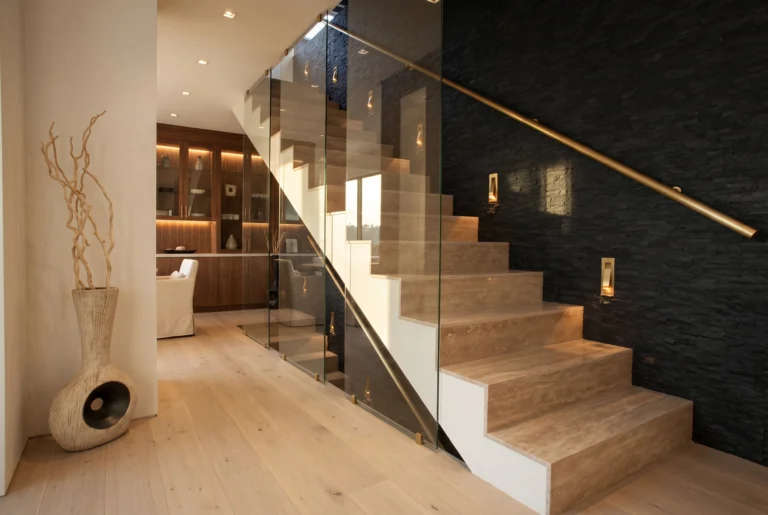
Home Remodeling
The Design-Build Remodeling Process: Why It Outperforms Traditional Contracting
May 17, 2026
Last updated September 23, 2026
Embarking on a home renovation is an exciting venture, but the traditional construction model can quickly lead to stress, communication breakdowns, and unexpected costs. Fortunately, there is a better way. The design-build remodeling process has revolutionized the home improvement industry by uniting all phases of a project under a single, accountable roof. In this article, we explain how this process works and why it consistently outperforms traditional contracting methods.
The Traditional Model: Design-Bid-Build
In the traditional model, a homeowner hires an architect or designer to draft plans. Once those plans are finished, the homeowner takes them to multiple general contractors to solicit bids. While this seems logical on paper, it frequently creates several issues:
- Budget Misalignment: Architects design beautiful concepts, but they are not always up-to-date on the real-time costs of construction materials and labor. It is common for a homeowner to pay thousands for blueprints, only to find that the contractor bids are double what they expected.
- The Blame Game: If a problem arises during construction, the contractor may blame the architect’s plans, while the architect blames the contractor’s execution. The homeowner is stuck in the middle, resolving disputes and absorbing the costs of change orders.
- Longer Timelines: Because the design and bidding phases are completely separate, it can take months before a shovel ever hits the ground.
The Design-Build Model: Unified Accountability
Design-build is a project delivery method where design and construction services are handled by a single entity under one contract. It is the model behind a smooth whole-home remodel. The architect, interior designer, and general contractor work together as a single team from day one. This integration provides several key benefits:
1. Designing to a Target Budget
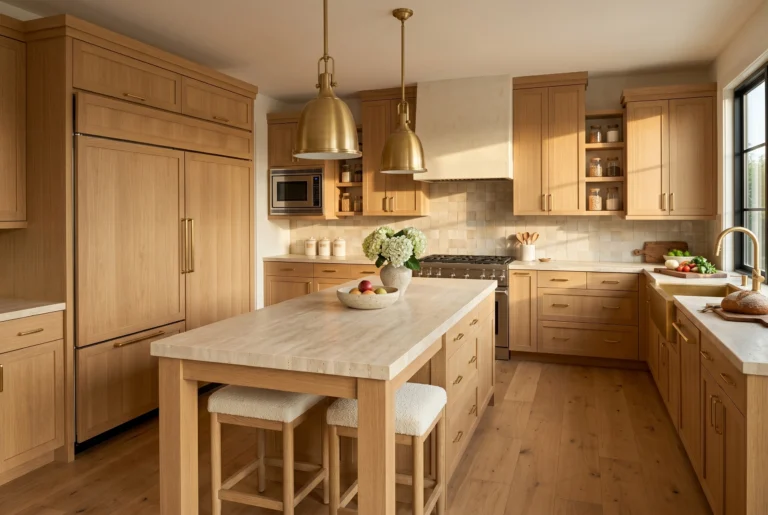
In a design-build setup, construction estimators are involved in the design meetings. As the designer proposes layouts and materials—whether it’s a specific custom white-oak cabinetry run or a slab of honed travertine—the estimator provides real-time cost feedback. This ensures that the final blueprints align perfectly with your budget, avoiding the heartbreak of redesigning plans later.
2. Faster Project Delivery
Because the design and construction teams are in constant communication, tasks can overlap. That is also why a kitchen budget holds better when estimators price the drawings as they are drawn. For example, structural engineering and long-lead material ordering can begin while the final aesthetic design details are being wrapped up. The same overlap applies at the other end of a job, where stucco repair and exterior painting are scheduled around the window install rather than queued behind it. Additionally, plan checks and permitting are handled by professionals who understand both the design intent and the local building codes, significantly speeding up approvals.
3. Single Point of Contact
With design-build, you have one point of contact for the entire project. You don’t have to act as the intermediary between an architect, designer, engineer, and contractor. Your design-build team manages all subcontractors, scheduling, and inspections, giving you peace of mind throughout the renovation. It is how we run every complete home remodel, from first sketch to final walkthrough.
4. Superior Quality and Cohesion
When the people who designed the space are also the ones building it, details don’t get lost in translation. The custom cabinetry, tile layout alignment, lighting placements, and finish selections are executed exactly as envisioned. The continuity ensures a higher standard of craftsmanship and a more cohesive design.
Master in Design (CSLB #979219) has operated as a premier design-build remodeling contractor in Los Angeles since 2012. We believe that honest communication, detailed planning, and single-source accountability are the keys to a successful remodel. Contact us today to discuss your next project.
Frequently Asked Questions About Design Build Remodeling
Is design-build more expensive?
Design-build is not usually more expensive, and it is often cheaper once change orders are counted. The design fee is visible rather than buried, which makes it look higher up front. Because estimators price the drawings while they are being made, the plans stay inside the budget, and the redesign that follows an over-budget bid never happens. Most cost overruns come from surprises, not from design fees.
What are the 5 phases of the design-build process?
The five phases of design-build are pre-construction planning, design and engineering, permitting, construction, and closeout. Planning sets scope and budget. Design produces drawings priced as they develop. Permitting runs through the local building department, which for Tarzana usually means LADBS. Construction follows the schedule set during design, and closeout covers final inspection, the punch list and the workmanship warranty.
What is a disadvantage of design-build?
The main disadvantage of design-build is that one company holds both the design and the construction, so there is no independent designer checking the builder’s work. That makes the firm’s reputation and license the thing you are really hiring. It also gives you fewer competing bids to compare. The protection is a written, itemized scope, so you can see what each line covers before you sign.
Are design-build firms worth it?
Design-build firms are worth it when a project involves more than one trade and a real schedule. One contract removes the gap where an architect blames the builder and the builder blames the drawings. It also lets long-lead items get ordered while design finishes, which shortens the calendar. For a single-room cosmetic update, a good general contractor alone is usually enough.
Ready to talk about your project?
Walk us through your space. No pressure. We'll get back to you in 24 hours.
Start Your Free EstimateService Areas